FAIR Maturity Matrix resources and lexicon
Maturity Matrix resources table
| Short | URL | Why is this relevant what can we do, learn from resource. |
| ARDC FAIR Self assessment tool | https://ardc.edu.au/resource/fair-data-self-assessment-tool/ | ARDC FAIR Self assessment tool |
| Change management stakeholders | https://fairtoolkit.pistoiaalliance.org/methods/change-agents/ | Addresses stakeholders affecting change management for FAIR |
| EDISON at Roche, from FAIRtoolkit | https://fairtoolkit.pistoiaalliance.org/use-cases/prospective-fairification-of-data-on-the-edison-platform-roche/ | The EDISON tool for FAIR data. |
| EDMC-DCAM model | https://edmcouncil.org/frameworks/dcam/assessments/ | DCAM is an industrial maturity model for data and its goverances developed and maintained by the EDM Council. |
| F-UJI | https://www.f-uji.net/ | F-UJI |
| FAIR Checker | https://fair-checker.france-bioinformatique.fr/ | FAIR Checker |
| FAIR Cookbook | https://faircookbook.elixir-europe.org/content/home.html | FAIR Cookbook |
| FAIR Cookbook code repository | https://github.com/FAIRplus/the-fair-cookbook | FAIR Cookbook code repository |
| FAIR data maturity model | https://www.rd-alliance.org/groups/fair-data-maturity-model-wg | FAIR data maturity model from the RD alliance |
| FAIR dataset maturity DSM tool | https://fairdsm.biospeak.solutions/ | FAIR dataset maturity DSM maturity assessment tool |
| FAIR Evaluation services | https://fairsharing.github.io/FAIR-Evaluator-FrontEnd/#!/ | FAIR Evalulation services |
| FAIR toolkit case: “FAIRifying” data | https://fairtoolkit.pistoiaalliance.org/use-cases/fairifying-collaborative-research-on-real-world-data-the-hyve/ | FAIR toolkit case: creating FAR data from from real world data |
| FAIR toolkit from EU project | https://www.fairsfair.eu/f-uji-automated-fair-data-assessment-tool | Fair toolkit from EU project |
| FAIR-Decide framework for pharmaceutical R&D | https://pubmed.ncbi.nlm.nih.gov/36716952/ | A FAIR-Decide framework for pharmaceutical R&D: FAIR data cost-benefit assessment; 2023 |
| FAIRplus Data-Maturity | https://github.com/FAIRplus/Data-Maturity | FAIR data maturity framework from the FAIRplus EU project / comcluded in 2022 |
| FAIRplus Data-Maturity | https://fairplus.github.io/Data-Maturity/ | FAIR data maturity framework from the FAIRplus EU project / comcluded in 2022 - github repository |
| FAIRshake | https://fairshake.cloud | FAIRshake |
| FIP Ontology | https://w3id.org/fair/fip | FIP Ontology |
| FIP Wizard | https://fip-wizard.ds-wizard.org/ | FIP Wizard |
| Identifier Policy at AZ, from FAIRtoolkit | https://fairtoolkit.pistoiaalliance.org/use-cases/adoption-and-impact-of-an-identifier-policy-astrazeneca/ | First steps for - relevant for the Process and Tools dimensions |
| Interpretation of the FAIR data principles | https://direct.mit.edu/dint/article/2/1-2/10/10017/FAIR-Principles-Interpretations-and-Implementation | Paper on the practical interpretation of the FAIR data principles, by some of the authors of the original FAIR paper. This still seems to represents the views of GO FAIR foundation in 2023 |
| Ontology catalogue and FAIR 'tools" | https://www.ebi.ac.uk/ols/ontologies | Ontology catalogue, FAIR 'tools" |
| Process for FAIR from FAIRtoolkit | https://fairtoolkit.pistoiaalliance.org/use-cases/sharing-fair-data-about-healthcare-partners-bayer/ | Process for FAIR: a 4 step data asset implementation cycle. |
| Readiness for change | https://fairtoolkit.pistoiaalliance.org/methods/readiness-for-change/ | Addresses change management for FAIR |
| Research Data Framework (RDaF) | https://www.nist.gov/news-events/news/2024/02/nist-releases-version-20-research-data-framework-rdaf | Research Data Framework (RDaF) developed at NIST |
| Search engine, FAIR Connect | https://fairconnect.pro/ | FAIR Connect (search engine) |
| Website FAIR checker | https://fairtoolkit.pistoiaalliance.org/methods/data-capability-maturity-model/ | Data providers and consumers can check how FAIR are web resources. Developers can explore and inspect metadata exposed in web resources. |
FAIR maturity matrix lexicon table
| Term | Definition |
| Accessibility | The extent to which (meta)data can be retrieved by humans and machines via a standardized communication protocol, with authentication/authorization supported when needed (FAIR “A”). [REF-FAIR2016] (nature.com) |
| Access rights | The documented conditions under which a dataset/service can be accessed and for what purposes (e.g., open, internal-only, controlled access), including authentication/authorization expectations. [REF-FAIR2016] [REF-ODRL] (nature.com) |
| CDISC | Clinical Data Interchange Standards Consortium; develops standards to structure/submit clinical research data (e.g., SDTM) and improve interoperability in regulated contexts. [REF-CDISC-SDTM] (cdisc.org) |
| CDE | (Common Data Element) A standardized data element definition intended to be reused across studies to improve consistency and comparability; often published with machine-readable element definitions. [REF-NIH-CDE] (cde.nlm.nih.gov) |
| CMMI | Capability Maturity Model Integration; a process improvement and appraisal framework used to assess and improve organizational process maturity (sometimes used as inspiration for maturity models). [REF-CMMI] |
| Controlled terminology | A governed set of allowed terms/identifiers used for consistent annotation and improved query/analytics (often a stepping stone toward ontologies). [REF-FAIR2016] (nature.com) |
| C level leader | In an organization, personnel holding roles such as CEO, CFO, CTO, COO with executive and strategy level decision- making capacities |
| Citizen data scientist | Individual within an organization who, despite lacking formal training in data science, utilizes data analysis tools and techniques to extract insights from data. These individuals often come from various backgrounds, such as business, marketing, or operations, and possess domain-specific expertise. Citizen Data Scientists leverage self-service analytics platforms, intuitive data visualization tools, and automated machine learning algorithms to explore datasets, generate reports, and uncover patterns or trends relevant to their roles. |
| Community Manager | Person who organizes groups of people around shared aims - see https://the-turing-way.netlify.app/collaboration/research-infrastructure-roles/community-manager.html |
| Community of Practice | A community of practice (CoP) is a group of people who share a common interest, profession, or expertise and come together to learn from each other, share knowledge, and collaborate on solving common problems. |
| Community of Practice | CSCCE Community Participation Model |
| Community of Practice Organiser | An individual or group responsible for facilitating and managing a community of practice (CoP). The organizer's role involves coordinating meetings, events, and activities for the community, creating channels for communication and knowledge sharing, and fostering a supportive and inclusive environment where members feel comfortable exchanging ideas and experiences. They may also be involved in recruiting new members, setting goals and objectives for the community, and ensuring that it remains vibrant and relevant to its members' needs and interests. |
| DAA (Data Access Agreement) | A legally binding agreement defining who can access data, under what security/privacy constraints, transfer conditions, and permitted uses (common for RWD/RWE and collaborations). [REF-ODRL] [REF-GDPR] (w3c.github.io) |
| DAG (Directed Acyclic Graph) | A directed graph with no cycles; commonly used to represent dependency structures in data pipelines/workflows (e.g., ETL orchestration). [REF-DAG] |
| Data actionability | Synonymous with machine actionable data - a property of the data that enables it to be acted upon my machines, presumably by being identifiable in some way by the agent as being of a specific type, for which defined actions/process are expected to be enabled |
| Data architect | A role in an organization focusing on processes, models and frameworks that manage the generation, use and governance of data in the most optimal form |
| Data Contract | The manifestation of expected properties for particular 'data' with respect to format compliance, internally consistent, and probably specification of the 'type' of the data, which enables defined services or operations to be performed on it |
| DCAT | W3C Data Catalog Vocabulary: an RDF vocabulary to describe datasets and data services in catalogs, enabling interoperability across catalogs. [REF-DCAT] (w3.org) |
| Data catalogue | A system (often an enterprise metadata catalog) that indexes datasets/data products and their metadata to support discovery, access requests, and governance. [REF-DCAT] (w3.org) |
| Data dictionary | Documentation that describes a dataset’s fields/columns (names, meanings, types, allowed values, units), enabling correct interpretation and reuse. [REF-NIH-CDE] (cde.nlm.nih.gov) |
| Data enclave | A tightly controlled environment for accessing highly sensitive data where export and connectivity are restricted; supports compliance while still enabling controlled FAIR access patterns. [REF-HIPAA] [REF-GDPR] (eur-lex.europa.eu) |
| Data mesh | An approach to address the problems of scaling data in large organizations, which promotes treating data as a product and organizing data architecture around business needs rather than technical or functional boundaries. |
| Descriptive metadata | Metadata intended to support discovery and understanding of content (e.g., title, description, keywords, creators, topic, domain context). [REF-FAIR2016] (nature.com) |
| Data scientist | See also “researcher” . Data Scientists find, compile, clean, preprocess and analyze complex datasets.. They interpret data trends, develop predictive models, and communicate findings to inform strategic decision-making. Data Scientists also design experiments, possess expertise in statistical methods, programming, data visualization, database management, and may have domain-specific knowledge. |
| Data steward | A data steward refers to the lead role in a data governance project. Data Stewards take ownership of the data and work with the business to define the programme's objectives. The role of a Data Steward is specifically tasked with maintaining data control in data governance and master data management initiatives on a day-to-day basis. Data Stewardship is required for data implementation and data management to succeed. An example of what they may do to achieve this is drafting the data quality rules which their data is measured against. |
| Domain | A domain is typically a broad area of study, for example BioSciences, Life Sciences. These may be divided into ‘sub-domains’ which are more specific, for example microbial genetics, plant phenotyping |
| EMA | European Medicines Agency; EU agency that evaluates and monitors medicines—relevant as a regulatory context that can shape controlled access, provenance, and reuse constraints. [REF-EMA] (ema.europa.eu) |
| ETL | Extract–Transform–Load: a pattern for moving data from source systems into a target store, typically applying transformations and quality rules along the way. [REF-ETL] |
| Enterprise | A large-scale commercial entity engaged in economic activities, such as production, distribution, or services, with the primary goal of generating profit. Enterprises vary widely in size, structure, and scope, ranging from small businesses to multinational corporations. They often involve complex organizational structures, such as departments, divisions, and subsidiaries, and may operate in multiple industries or geographic locations. Enterprises typically employ a significant number of people and utilize diverse resources, including capital, technology, and human expertise, to achieve their business objectives and meet the needs of customers or clients. |
| FAIR | An established acronym for the aspirational principles defined elsewhere (ref), indicating Findable, Accessible, Interoperable, Reusable. |
| FAIR architect | a role in an organization specifically tasks with developing processes to deliver FAIR data and services |
| FAIR assessment | The act of evaluating the FAIRness of a dataset/service using defined indicators/metrics (automated where possible) to identify gaps and improvements. [REF-FAIR2016] (nature.com) |
| FAIR Digital Object | A FDO is an information entity composed by a persistent identifier (PID) such as a DOI resolving to a PID Record that gives the object a type along with a mechanism to retrieve its bit sequences, metadata and references to possible operations according to the FAIR principles. |
| Fake FAIR | Refers to instances in which the term FAIR is used but the underlying principles (or their semantic meaning) are ignored or deliberately misinterpreted, |
| FDA | U.S. Food and Drug Administration; relevant regulatory body in life sciences where data governance, provenance, and RWD/RWE definitions influence reuse expectations. [REF-FDA-RWE] (fda.gov) |
| FIP | FAIR Implementation Profile |
| Governance | Governance is a key element of community building, providing a means for conflict resolution and reconciliation. |
| GO-FAIR | Community initiative supporting FAIR implementation via community-agreed choices and implementation networks (useful for aligning “how we do FAIR”). [REF-GOFAIR] |
| GDPR | EU Regulation (EU) 2016/679 governing personal data processing; drives requirements for lawful processing, access controls, and reuse limitations for sensitive data. [REF-GDPR] (eur-lex.europa.eu) |
| GraphQL | A query language for APIs that lets clients request exactly the data they need; may be used for metadata/catalog APIs or data services. [REF-GRAPHQL] (graphql.com) |
| Gremlin | Apache TinkerPop graph traversal/query language; relevant in graph/knowledge graph implementations in pharma data platforms. [REF-GREMLIN] (tinkerpop.apache.org) |
| GUPRI | globally unique persistent resolvable identifier. |
| HL7 | FHIR HL7 Fast Healthcare Interoperability Resources: an API-focused standard to represent and exchange health information; often used when integrating clinical/EHR/RWD sources. [REF-FHIR] (healthit.gov) |
| HIPAA | U.S. law and associated rules governing protection of health information; often constrains access/reuse for clinical and real-world health data. [REF-HIPAA] (en.wikipedia.org) |
| HTTP | Hypertext Transfer Protocol; foundational application protocol for web APIs and resolvable identifiers (important for FAIR A1/A1.1 implementations). [REF-HTTP] (rfc-editor.org) |
| ID (Identifier) | A string/URI used to unambiguously reference an entity (dataset, sample, person-role, concept); central for linking, provenance, and interoperability. [REF-FAIR2016] [REF-URI] (nature.com) |
| IMI | Innovative Medicines Initiative; large EU public-private partnership relevant to pharma collaboration and data sharing contexts. [REF-IMI] (efpia.eu) |
| Interoperability | Ability of systems/tools to exchange and correctly interpret data using shared formats and semantics (FAIR “I” includes semantic interoperability). [REF-FAIR2016] (nature.com) |
| JSON | JavaScript Object Notation; a widely used text-based data interchange format used in APIs and metadata payloads. [REF-JSON] (rfc-editor.org) |
| KPI | Key Performance Indicator; a measurable signal used to track progress (e.g., FAIR adoption, metadata completeness, PID coverage). [REF-KPI] |
| Licensing | Assigning a clear usage license/terms to data/metadata to enable lawful reuse (FAIR R1.1 emphasizes clear reuse conditions). [REF-FAIR2016] [REF-ODRL] (nature.com) |
| Linked Data (LD) | A way of publishing structured data with resolvable identifiers and links between resources (often using RDF/URIs) to enable integration. [REF-FAIR2016] [REF-RDF] (nature.com) |
| KG / Knowledge Graph | knowledge graph: a type of data structure defined by nodes and edges, where nodes represent entities and edges, represent relationships between entities. |
| knowledge enabled citizen | Organization member who is empowered with access to information, possesses critical thinking skills, and is digitally literate, enabling them to contribute effectively to the organization's goals and objectives. |
| Machine actionable data | Data is machine actionable when machines can perform automated processing based on the object type information about the supported operations that can be applied to the object. |
| Machine interpretable data | Data is machine interpretable when described with semantic artefacts to interpret the nature of the digital object. |
| Machine readable data | Data is machine-readable if it is structured using knowledge representation languages (such as JSON, JSON-LD, RDF, XML) |
| Machine-ready data | Machine-ready data adheres to specific data standards, such as consistent formatting, well-defined data types, and clear labeling, making it readily interpretable by automated systems. It includes metadata that provides contextual information about the dataset, further enhancing its usability for machine-based analysis. |
| MDR (Metadata Registry) | A system that stores governed definitions of data/metadata elements (often aligned with ISO/IEC 11179 concepts) to support consistency and reuse. [REF-ISO11179] (en.wikipedia.org) |
| Metadata Data | that describes a resource (what it is, who created it, when, how to access, how to reuse, provenance, semantics). Required to make data Findable and Reusable. [REF-FAIR2016] (nature.com) |
| MIC (Minimal Information Checklist) | A checklist specifying minimal metadata required for a domain/use case (e.g., assay reporting requirements) to support reuse and quality. [REF-FAIR2016] (nature.com) |
| MTA (Material Transfer Agreement) | A legal agreement governing transfer and permitted use of physical materials (often linked to data rights, provenance, and reuse conditions). [REF-MTA] |
| MDM | Master Data Management |
| MVP | Minimum viable product is a version of a product with just enough features to be usable by early customers who can then provide feedback for future product development. A focus on releasing an MVP means that developers potentially avoid lengthy and unnecessary work. MVP represents a more entreprise relevant outcome compared to POV/POC, which may not be pursued or supported further. |
| Neo4j | A native graph database commonly used to store/query connected data and property graphs; sometimes used to implement KGs. [REF-NEO4J] (neo4j.com) |
| NoSQL | “Not only SQL”: non-relational database approaches (document, key-value, wide-column, graph) used when relational tables are not sufficient. [REF-NOSQL] |
| ODRL | Open Digital Rights Language: a W3C recommendation for expressing usage control policies (permissions, prohibitions, duties) in a machine-readable way. [REF-ODRL] (w3c.github.io) |
| OMOP-CDM | Observational Medical Outcomes Partnership Common Data Model (OHDSI): a standard model and vocabularies for observational health data analytics. [REF-OMOP] (ncbi.nlm.nih.gov) |
| Ontology | A formal, identifier-based representation of concepts and relationships used to make meaning explicit for machines (key to semantic interoperability). [REF-FAIR2016] (nature.com) |
| OpenAPI | A specification to describe REST APIs in a machine-readable way, supporting consistent documentation, tooling, and lifecycle governance. [REF-OPENAPI] (openapis.org) |
| Ontologist | An expert in knowledge representation and ontology building, |
| Operating Model | The framework or blueprint that defines how an organization delivers value to its stakeholders, executes its strategies, and manages its resources to achieve its objectives. It encompasses the processes, structures, systems, and capabilities that are necessary to support the organization's business activities and functions effectively. The operating model provides a detailed description of how different parts of the organization interact, collaborate, and operate to fulfill its mission and vision. It outlines the allocation of resources, roles and responsibilities, decision-making processes, and performance metrics that govern the organization's day-to-day operations. |
| PID | Persistent Identifiers |
| POV/POC | proof of value/proof of concept correspond to exploratory work to demonstrate feasibility and potential value. these are prerequisite to decide on future investments, prioritization efforts and scaling |
| Property graph | A graph data model where nodes/edges can have properties (key-value attributes); common in Neo4j and many graph DBs. [REF-NEO4J] (neo4j.com) |
| Provenance metadata | Metadata that records origin/history of data: sources, transformations, responsible agents, timestamps, and processing context; supports trust and reuse. [REF-PROV] [REF-FAIR2016] (w3.org) |
| PROV W3C provenance | framework (including PROV-O ontology) for representing provenance information for interchange across systems. [REF-PROV] (w3.org) |
| QMS | Quality Management System: the policies, processes, and records used to ensure quality and compliance; can be relevant when operationalizing FAIR processes. [REF-QMS] |
| QUDT | Quantities, Units, Dimensions and Data Types: vocabulary/specs for consistent, machine-interpretable units and quantities. [REF-QUDT] |
| RDM | Reference Data Management (NB: also stands for Research Data Management). |
| Researcher | A person engaged in conducting research, possibly recognized as an occupation by a formal job title. While a researchers produces and uses data, they are not necessarily data scientists (see: data scientist). |
| RFP | Request for Proposal: a formal process requesting suppliers for an offering regarding one or several capabilities |
| RDA | Research Data Alliance; an international community organization producing guidance and outputs on data sharing/interoperability (incl. FAIR maturity models). [REF-RDA] |
| RDBMS | Relational Database Management System: tabular database systems using relations (tables, keys) and SQL for structured data management. [REF-RDBMS] |
| RDF | W3C Resource Description Framework: a graph-based data model for representing statements (triples), widely used for linked data and semantic interoperability. [REF-RDF] (w3.org) |
| Reusability | Ability to reuse data in new contexts with minimal ambiguity, supported by rich metadata, provenance, community standards, and clear usage conditions (FAIR “R”). [REF-FAIR2016] (nature.com) |
| RO (Research Object) | A packaging/identification approach to aggregate resources related to an investigation (data, methods, workflows) under a shared identifier for sharing/reuse. [REF-RO] |
| ROI | Return on Investment: a measure to quantify value gained vs cost invested (useful for FAIR business case and prioritization). [REF-ROI] |
| RRID | Research Resource Identifier: identifiers used to cite key biomedical research resources (e.g., antibodies, model organisms, software) to improve transparency and reproducibility. [REF-RRID] (rrids.org) |
| RWD | Real-World Data: health-related data collected outside traditional randomized clinical trials (e.g., EHRs, registries, claims); often under strict governance constraints. [REF-FDA-RWE] (fda.gov) |
| RWE | Real-World Evidence: clinical evidence regarding usage/benefits/risks derived from analysis of RWD (FDA definition). [REF-FDA-RWE] (fda.gov) |
| Subject matter expert | A subject matter expert (SME) is a person with deep domain knowledge, often as a practitioner of the area of knowledge. SME are often consulted by knowledge engineers and ontologists in what is known as 'knowledge elicitation exercice' to express use cases and concepts which are then organized and modeled in semantic artifact by knowledge engineers. (NB: also stands for Small to Medium Enterprise). |
| SHACL | W3C Shapes Constraint Language: a standard language for describing and validating RDF graphs against constraints (“shapes”). [REF-SHACL] (w3.org) |
| ShEx | Shape Expressions: a schema/validation language for RDF (community specifications widely used for RDF data shape validation). [REF-SHEX] (shex.io) |
| SPARQL | W3C query language for RDF graphs used to retrieve and manipulate RDF data. [REF-SPARQL] (w3.org) |
| Structural metadata | Metadata describing the internal structure/organization of data (e.g., schema, tables/fields, relationships, file structure, versions). [REF-FAIR2016] (nature.com) |
| Turtle | W3C RDF 1.1 Turtle: a compact, human-readable syntax for serializing RDF. [REF-TURTLE] (w3.org) |
| URI | Uniform Resource Identifier: the standard syntax to identify resources on the web; commonly used for globally unique identifiers in linked data. [REF-URI] (rfcinfo.com) |
| ValueSet | A defined set (or binding) of allowed values for a field/element (often governed and versioned), supporting consistency and interoperability. [REF-NIH-CDE] (cde.nlm.nih.gov) |
| Wikidata | A free and open knowledge base that can be read and edited by humans and machines; often used as a cross-domain linking hub for identifiers and concepts. [REF-WIKIDATA] (wikidata.org) |
| XML | Extensible Markup Language: a structured markup format used for data exchange; still common in regulated and enterprise integrations. [REF-XML] |
| YAML (YML) | YAML Ain’t Markup Language: a human-friendly serialization format commonly used for configuration files and structured documents. [REF-YAML] (yaml.com) |
| ## Illustration credits table |
| Level | Nickname | Marketplace metaphor | Image credit | URL | Formatted image |
| 0 | Life is unFAIR | “Junkyard” | jumble, detail of photo by Beth Macdonald on Unsplash | https://unsplash.com/photos/brown-wooden-table-and-chairs-a1O67ZQmaYc |  |
| 1 | Started the FAIR journey | "Flea market" | yard sale, detail of photo by Nikola Duza on Unsplash | https://unsplash.com/photos/man-in-jacket-sitting-on-floor-while-smoking-CLaojy0IG1E | 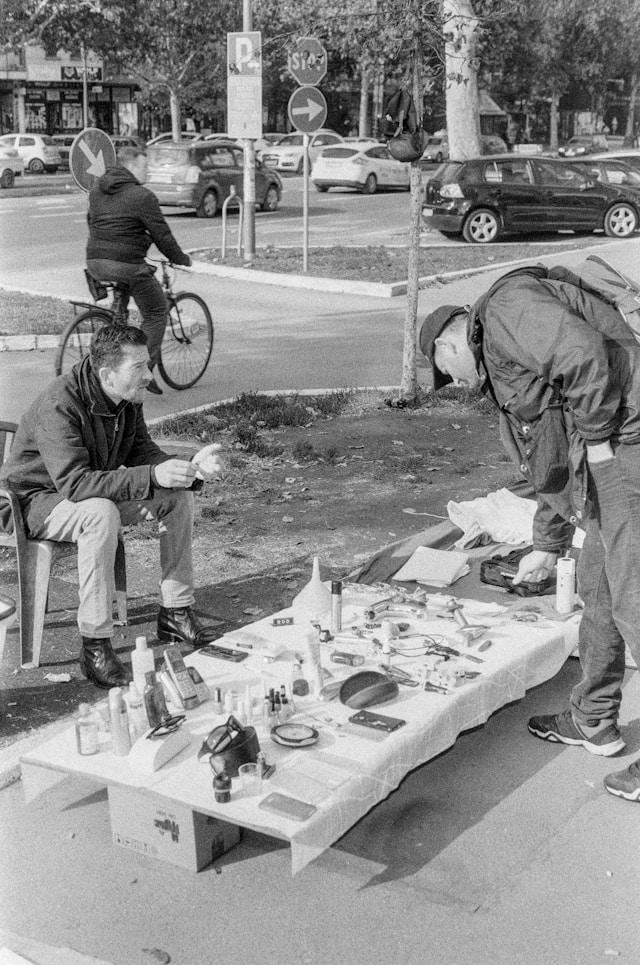 |
| 2 | Getting FAIR | "Street Market" | market, detail of photo by Toa Heftiba on Unsplash | https://unsplash.com/photos/man-sitting-on-brown-chair-beside-rack-R_bySyREwUY |  |
| 3 | Pretty FAIR | "Specialized Local Markets” | store, detail of photo by big dodzy on Unsplash | https://unsplash.com/photos/woman-in-red-jacket-standing-near-green-and-white-plastic-crates-t4xqgMuudlw | 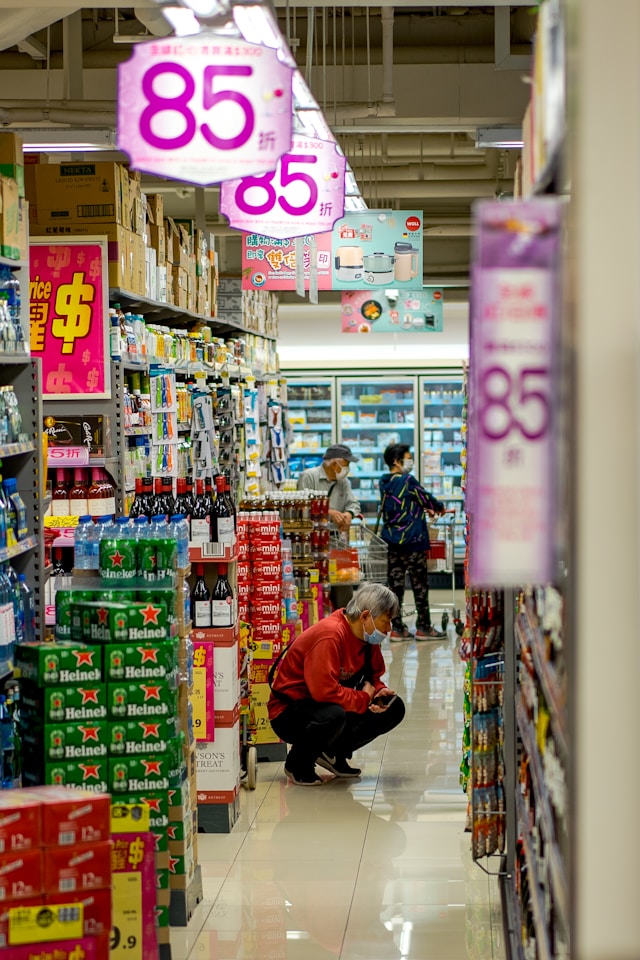 |
| 4 | Really FAIR | "Hyper Market" | super center, detail of photo by Sangga Rima on Unsplash | https://unsplash.com/photos/people-inside-building-RUA9K_rEzq4 |  |
| 5 | FAIRest of them all | "Digital Online Store" | Online shopping, detail of photo by Campaign Creators on Unsplash | https://unsplash.com/photos/person-using-macbook-pro-OGOWDVLbMSc |  |